Monday, October 24, 2022

THE HORROR HARVEST: HALLOWEEN ENDS (2022)

 HALLOWEEN ENDS (2022)


I've made no secret about this; I am a huge Halloween fan. Halloween is my favorite horror franchise. Period. The franchise has certainly had a murky history, with its share of ups and downs. I have my biases and periods in the series I prefer over others (any Halloween film with Donald Pleasence is the gold standard for me. ANY). Above all, I only ask one thing when it comes to new Halloween films: treat Michael Myers well. To me, this is his franchise. To me, I don't go to Halloween films for anything else. And I'm guessing for most of us, if you're all being honest with yourselves, you all go to these movies for the same reason: Michael Myers.

David Gordon Green and Danny McBride's Halloween trilogy has been an interesting experiment to say the least. I feel Halloween 2018 (we'll call it H40) has only grown better with time, at least for me. I recently watched it again in a movie theater and I very much enjoyed it yet again. It's not perfect by any means, but I feel the film, by and large, nails what has made the Halloween franchise so enduring and endearing for over four decades. Halloween Kills is not nearly as good as H40, I'll admit. But for everything that doesn't work in that film, nearly every section with Michael Myers does work. Michael Myers, and how he was menacingly portrayed, really saves the film for me. I'll watch both H40 and H-Kills again and again for these reasons.

Halloween Ends fumbles the ball entirely for one major reason (and you can probably guess what that reason is): a terribly poor treatment of Michael Myers. Michael Myers barely does anything in this movie, and what he does do is underwhelming and head-scratching. It doesn't help matters that the trailers and marketing sold us on an epic showdown between Michael Myers and Laurie... and that comprises the last five minutes of the film.

But...

Nestled in this movie is a very intriguing story about a brand new character and how, maybe, the town of Haddonfield is actually the real source of evil. However, this story isn't set up in any way by the previous films. And given how intimately connected the previous films were to each other, this story comes across as jarring, tonally different, and alien to the story we were following for two entire movies.

If H40 and H-Kills worked for you, more or less, I get the feeling that this film won't. If those two movies didn't work for you (then why did you even bother watching this to begin with?) I get the feeling you probably will enjoy this film. This movie comes across to me as the Halloween film for people who don't like Halloween films (or at least the majority of Halloween films).

I apologize in advance as this review will be a big one.

So let's dig into it!

INITIAL IMPRESSIONS

There are many interesting elements to this movie and ideas that have potential for exploration. I feel the movie is well acted and the social commentary is not quite as ham-fisted as it was in H-Kills. There are a few fun homages here and there such as characters watching John Carpenter's The Thing on television whereas characters in the original Halloween were watching Howard Hawk's The Thing on television. This film also seems to draw heavy influence from Stephen King's Christine (also wonderfully adapted by John Carpenter into film). There's even a touch of Natural Born Killers for a bit, which is left unfulfilled. Also, Laurie's new house appears to be the same house from Halloween 4 and Halloween 5, which was nice to see.

The movie has a few great set pieces such as the open prologue narrated by Jamie Lee Curtis in which she describes the horrors of Michael Myers hanging over the down like a pall of despair, people dying and being killed even without Michael Myers being there. The first major scene with our new protagonist, Cory, and his babysitting stint going horrifically wrong, I felt was quite potent. And there are some fantastic kills towards the latter half of the film that will stick with you too.

But the film leverages its potential at the expense of its main characters: Michael Myers and Laurie Strode. Michael Myers is barely in the film, maybe a paltry ten minutes if that. Instead of making those ten minutes count, Michael Myers is largely ineffectual and seemingly out of place in the story. His inclusion in the film feels like an afterthought or hastily tacked on at the last minute. He's weak, feeble, acts wildly out of character, and inexplicably on the opposite end of the spectrum from where we last saw him in H-Kills with no explanation given. There is no connectivity between this Michael Myers and the Michael Myers from H-Kills. He's a shell of his former self in this film and completely unnecessary to the plot.

Similarly Laurie is portrayed jarringly different from the previous two films. I was not a fan of her "Sarah Conner" impersonation from the first film, but at least she remained consistent from H40 to H-Kills (as did Michael Myers). Just like Michael, we meet an inexplicably different Laurie Strode. Her character has moments of continuity with the previous films, but overall feels largely like a different character. Still, she's wonderfully portrayed by Jamie Lee Curtis and is given far more to do than Michael Myers. Yet, she is merely a side character to the central plot, a passenger rather than the driver of her own story.

This film introduces a new character not seen in the previous films; Cory Cunningham. The film centers around him in which a tragic accident sends him spiraling down to becoming a serial killer and Michael Myers' successor. His journey parallels Arnie Cunningham's from Christine with a slow descent into madness, evil infecting him from within... or from without? I don't know because the central message we're getting from the film, through Laurie's dialog and other allusions, is that Cory becomes infected with evil from within yet it presents the idea of evil being passed to him externally through direct contact with Michael Myers and the cruelty of Haddonfield's citizenry. There's also a Norman Bates parallel with Cory's mother. Nature versus nurture? Internal versus external? The film can't seem to make up its mind.


I like the idea of the town of Haddonfield as a character itself, a dark dour battery of evil, slowly bringing down everyone within it to varying degrees of darkness. I like the idea of the dual evils, external and internal. But all of this runs contrary to the intent of the original 1978 film, the film which director David Gordon Green and writer Danny McBride founded their trilogy's premise upon: the randomness of violence, violence without reason or consciousness. If the point of eliminating Halloween II (1981) from the continuity was to bring Michael Myers back to an unconscionable source of evil, this movie undermines that intent by exploring the origins of evil. Did the town turn Michael into a monster? That's the whole conceit of Cory's story and he is meant to be a parallel to what happened to Michael. So, which is it?  This feels like, to me, the film retreading ground from Rob Zombie's Halloween duology, in particular the extremely divisive elements explaining away Michael's motivation.

This film, to me, draws from a few previous Halloween films, namely all of the divisive films in the series. With Michael barely being in the film and what little he is in it feeling like a wildly different character altogether, feels reminiscent of Rob Zombie's Halloween II and "Hobo-Myers." Michael's demise in this film recalls his "permanent" demise in H20. His living in the sewers and eating rats recalls Halloween Resurrection. And Michael's overall lack of presence and the characterization of Haddonfield feels more akin to Halloween III: Season of the Witch. All of these elements are among the more divisive in the series, polarizing with fans alike.

Everyone has their own preferences and films in the series that work and don't work with them. If H40 was attempting to distill everything that worked for audiences from the series, this film comes across to me as a distillation of everything that doesn't work for most audiences from the series. In a certain way, this film feels like "the Halloween film for people that hate Halloween films." If I could characterize Halloween Ends any better, it's another example of Hollywood "subverting audiences' expectations," a phrase which, by and large, has become synonymous with divisive, polarizing, and franchise shattering films.

Again, I feel the story told in Halloween Ends has potential, not as a main entry in the Halloween series, but rather as a spinoff, similarly to how Halloween III stood apart from the rest (a film notorious for being outright rejected by audiences for years, people only coming around to it decades after the fact). Again, that movie was a Halloween film for people who wanted no more of Michael Myers and Laurie Strode. In a weird way, this new story is ruined by the inclusion of what most of us wanted: Michael Myers. The specter of Michael Myers hovering over the town works, but the actual presence of Michael being there fails abysmally. Michael is poorly treated in this film and would benefit greatly by being removed from the film entirely. In isolation, without Michael Myers, the story of Halloween Ends is intriguing, but the mishandling of Michael (and Laurie too I guess) is what ultimately makes the film so unsatisfying.

The story told in Halloween Ends comes across as the wrong story to tell at this time. No plot threads or through-lines from the previous films are followed up on, leaving me to think that there was no plan for a trilogy when they started with H40. Halloween Ends feels like a different trilogy's finale, not the one that should've concluded H40 and H-Kills.

Overall Ranking: 4 out of 10

Cory's story feels like it was meant to be another movie and a different ending was smashed onto it. The ideas are intriguing and filled with potential, but there is virtually no cohesion with previous films and sketchy cohesion within this film itself. And that end fight scene (which felt completely tacked on and unearned)... what the hell was that? We finally get Michael Myers back and he is hilariously defeated and ground into hamburger. That's like making a sequel to Jaws in which a barracuda does most of the killing throughout the entire film. And when Bruce finally appears, he's killed off by the first fishermen he encounters.

I've only seen the movie once and, frankly, I don't feel the need to watch it again. My gut reaction after the film ended was disappointment. From the moment the movie started I instantly had the feeling something was wrong from the music. The last two films began with the ominous notes of the score, setting a terrifying tone for the film. This film begins with music from the Haddonfield radio station, which plays into elements of the movie to come, doing anything but establish a tone. The feeling setup with this music was anything but Halloween. It's a nitpick, I know, but it seemed to foreshadow how "different" this film would be from the others and, ultimately, how I ended up feeling about the movie by the end.

For more of my thoughts on the Halloween franchise, check out these previous posts below

THE HORROR MOVIE MASTER LIST

Monday, October 17, 2022

MARVEL CINEMATIC UNIVERSE: WEREWOLF BY NIGHT (2022)

 MARVEL CINEMATIC UNIVERSE

CHAPTER... WHO KNOWS ANYMORE?

WEREWOLF BY NIGHT


Yep, I returned to that once great obsession of mine, the Marvel Cinematic Universe. I've missed a few chapters of the MCU in the last two years and fallen off of the MCU gravy train. I used to be hopelessly addicted to the MCU, never missing a thing. I watched anything with even the slightest hint of being connected to the MCU (Agents of SHIELD, Daredevil, Agent Carter, Jessica Jones, Inhumans, all of it!). 2018 felt like a high point with Black Panther, Infinity War, and Ant-Man and the Wasp. But ever since 2019 my enthusiasm has been drying up.

An ending can sometimes make or break the whole story (or at least lessen the journey making you question: "Was it worth it?"). I did not like Avengers: Endgame and the film has only grown worse with each subsequent viewing. Endgame hit the mark for so many viewers, but it missed the mark with me. Endgame felt like the start of the MCU's significant decline with me personally. With the exception of the Spider-Man films, every entry in the MCU since Endgame has either only slightly been better or has been far worse in my opinion.

I gave up on watching the D+ MCU shows in 2021, but I stayed for the movies, naively hoping they'd be different, better, with more effort put forth into them. To be fair, I am not the typical viewer of the MCU. I have a modestly extensive knowledge base of Marvel's comic books. Perhaps the most egregious fault I have found with the MCU since Endgame, the big reason why I have largely felt alienated by the MCU, is in their adaptions of the source material or lack thereof. The MCU barely resembles the characters and stories I have read for years, for most of my life. It's surprising now when I see something in the MCU that actually resembles the comics in more than a superficial way.

Let's put it this way: Say you've read Stephen King's IT or Harry Potter or the Lord of the Rings and not only that, you loved them and read them multiple times for years. Then you went to see the movie based on the book and that movie was about punk rockers traveling into space to battle the cheeseburger empire. You'd be saying something akin to: "Hey, that's not Harry Potter." This is more or less how my experiences have been with the MCU since 2019.

I came back to D+ for Moon Knight and did not like it. I saw Doctor Strange 2 and that film finally broke me. I had to walk away. Of the dozen or so D+ MCU shows I've only seen three and disliked them all. I haven't yet seen THOR: LOVE AND THUNDER, but have been told by close friends and multiple other sources that the film is... disappointing to say the least. And from all indications BLACK PANTHER 2 seems to be headed in the exact same direction. Unless something convinces me otherwise, I will be sitting out Black Panther 2 as well.

To be completely transparent: I am not in Marvel's corner anymore.


A MOMENT OF WEAKNESS

But, like all junkies, I had a relapse. I went back to D+ for, I won't say the "last time," but hopefully the last time for a while. Another adaptation of an IP I have a strong attachment to received its MCU debut: WEREWOLF BY NIGHT.

Needless to say, nothing has changed. There were four characters in this 55 minute special that I recognized from the comic books: Jack - Werewolf by Night, Ted - Man-Thing, Elsa Bloodstone, and Ulysses Bloodstone. And none of them felt like the characters I know and love from the comics. Nothing about Jack recalled the character I've read for years from the comics. Man-Thing looked great, but was characterized completely different. And the depiction of Elsa was all wrong beyond the accent.

The only character among them that felt somewhat accurate was Ulysses Bloodstone and he was dead at the beginning of the film. But if that WAS his talking corpse spelling out the details of the plot then he was physically unrecognizable as the character (my impression is that it wasn't his corpse, but another corpse he was speaking through, at least I hope that's the case). And if that corpse was supposed to be the Frankenstein Monster or N'Kantu ~ the Living Mummy then it's still wrong.

The black and white classic horror filter felt tacked on and not fully thought through. The special was actually filmed in color and the black and white was added after the fact. I noticed a few digitally added spots of cigarette burns, but it would've been nice to have seen more, for instance: film grain, 4:3 aspect ratio, camera jutter, have the score drop out at times, and overall a little more effort and authenticity in recreating the 30s horror feel. 2007's GRINDHOUSE went to far greater lengths to recreate the 70s and 80s film experience and this special put forth the shallowest effort by comparison.

The tongue n' cheek tonal approach signaled a few things to me: 1 - it felt like the filmmakers themselves didn't think much of these characters and treated them as cheesy schlocky B-movie fair. 2 - that the MCU refuses to drop the humor and will go to great lengths to maintain said humor. 3 - if this is how they treat the horror characters then we have reason to believe that Blade and Ghost Rider will be  treated no differently. Above all, it showed me that the MCU is firmly entrenched in their formula and will drive it into the ground, potentially killing the genre as a whole, before changing.

Jack and Ted were cut and paste copies of Rocket and Groot. If Elsa was Gamora (which isn't that far of a stretch) and they were on a black and white alien planet (there was one in Thor: Love and Thunder), with only a few minimal changes this could've easily been a scrapped Guardians of the Galaxy story. This entire film felt empty, devoid of care or emotion, and lacking any love for the genre, characters, and source material. In short, it felt like a soulless product.

Overall Ranking: 4 out of 10

The filmmakers couldn't even be bothered to get the characters right, provide an authentic story, nor embrace the black and white classic horror homage beyond a filter change and three digitally inserted cigarette burns.

Look, I realize these characters are considered D-Listers or worse by many and would say that no one cares about these characters anymore. For the majority of people, that's probably true. But so were the Guardians of the Galaxy and Ant-Man, and many others. I realize I'm in the minority in that I know and love Werewolf By Night, Man-Thing, Ulysses & Elsa Bloodstone and the majority of people don't care. But if there's anyone who should care, more than me or anyone else, for these characters it should be Marvel themselves. And this definitely feels like Marvel doesn't care at all. So, if Marvel themselves doesn't care that signals to us that we shouldn't care either.

I wanted a Werewolf By Night film adaptation. I want to watch and like every Marvel show and movie coming out (for a decade there I almost did). But it feels to me that Marvel themselves doesn't care about their characters or source material anymore. It feels like Marvel is actively eroding their fans and destroying their IPs with each new product. Again, if Marvel is signaling to us that they themselves don't care about their comics, characters, history, or movies and television shows... then why should we?

If you'd like to read about my rising love and falling out with the MCU, check out the posts linked below

THE MARVEL CINEMATIC UNIVERSE (MCU)


Fox-Marvel, Sony-Marvel, and other stuff too!


Thursday, August 18, 2022

THE HORROR HARVEST: PREY (2022)

 PREY (2022)


The Predator franchise has long been a favorite of mine and I have found plenty to love in each of the films. While there isn't a film in the series that I truly despise, I will admit some are better than others and the heights of the original 1987 classic have yet to be equaled. The Predator series veered in a radically different direction almost immediately with Predator 2, placing it in a unique space among franchises. With no recurring cast or storyline, each subsequent Predator film has to build anew with the titular Predator itself being the only constant.

When I first heard about PREY a year or two ago along with the plot synopsis, not only did it sound familiar (because a fan film from years ago basically already told this story), but it also read as though it were playing into all of the Hollywood troupes of the last seven years, troupes which had become tired and obnoxious by this point. Then the first trailer came out and... it did not look good. The marketing for the film leaned into these tired cringe troupes hard, so hard in fact, that I was ready to ignore the film completely.

But then I heard from one friend about how much they liked it. Then I heard a positive review from another friend. And then some more trusted reviewers spoke well of it, saying it wasn't the greatest film in the world, but it was a solid effort and worth my time. So, I recently gave it a watch and you know what? I actually really enjoyed it!

THE SYNOPSIS

The year is 1719 A.D. The setting is the North American Great Plains. A predator lands on Earth for a hunt and stalks a small tribe of Comanche. A young Comanche girl named Naru discovers the predator's tracks and begins stalking it. Naru must convince her tribe of the monster hunting them before everyone lies dead or dying at the predator's feet.


INITIAL IMPRESSIONS

The story is simple and to the point, not trying to be anything more than a solid horror movie. The movie is beautifully shot with some very impressive shots of the landscape. The acting is well executed for the most part and the film feels fairly authentic. The film's pacing is nice, moving along rather quickly yet not spastic and stuffed with action (like many Hollywood movies since 2014). There are some nice set-pieces too, some good ones that barely feature the Predator even. But most importantly, the Predator itself is treated well, menacing, and wicked.

As a Predator fan, I have a strong affinity for Alan Silvestri's original soundtrack. It's iconic to me and instantly recognizable. As I was watching I found that often times the score for Prey kind of faded into the background, dull and nondescript. I said to myself that I wished the film had utilized Silvestri's score. But then I realized that the film had great atmosphere and tension despite the muted generic soundtrack. So, all of that being said, I give this movie a pass on NOT using the iconic Predator music as it managed to create a naturalistic atmosphere and rising tension.

Not to ramble on and on, the filmmakers did an excellent job of crafting a quality frontier horror story. The pacing, the atmosphere, and cinematography are evocative of several esthetics present in westerns, which is perfect. All in all, I liked the story and the filmmaking approach to this movie. The gore was a little tame in comparison to previous Predator movies, better than the PG-13 effort of the first Aliens VS Predator, but nowhere close to the brutality of Predator, Predator 2, and AVP:R. But this was a Disney movie so I guess we're lucky to get any gore at all.

And after watching this movie it really made me long for a whole subgenre of movies like this: period piece films featuring indigenous people battling against monsters. Maintain the wilderness horror elements and then bring in the creature! 

Overall Ranking: 7 out of 10


I do love the Predator films, yes, even the negatively received one. I even love the Predator comics (particularly the Dark Horse Comics from the 90s). The Predator is such a cool creature design, one that never seems to grow old. I always hoped the Predator films would rival the Alien franchise, but they always seemed a step or two behind. Hopefully we'll get more quality Predator films to follow this.

Now, I may be in the minority here, but I think the title: PREY is dumb. Yeah, I get it. Predator. Prey. Someone somewhere thinks they're more clever than they really are.

Here's what I thought of the last Predator film and Alien: Covenant too

THE PREDATOR (2018)

ALIEN: COVENANT (2017)

Tuesday, June 21, 2022

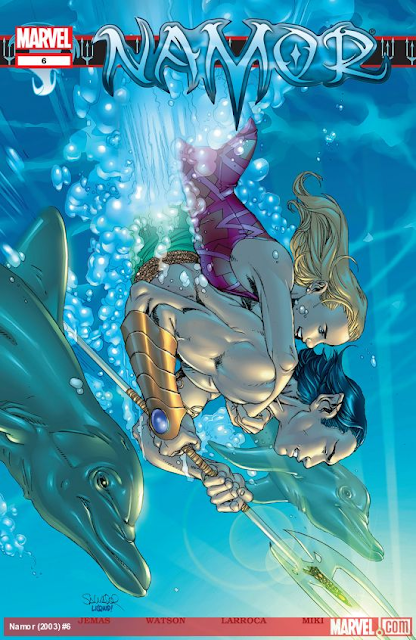
RIME OF THE ANCIENT SUB-MARINER: NAMOR #1 - 12 (2003)

SAILING WITH SUBBY

MARVEL LIFE AQUATIC


Welcome defenders of the deep! 

Another of our favorite comic book characters is Marvel's very first super-hero, NAMOR ~ THE SUB-MARINER. First appearing in Motion Picture Funnies Weekly #1 from April 1939 (believed to be less than ten copies in existence), Namor next appeared in Marvel Comics #1 in October of 1939. Created by Bill Everett, Namor was the first Marvel Comics character to embody the Marvel hero archetype as we know it today i.e. the tragic backstory, a multifaceted and layered personality, and the freak mutation resulting in super powers. He's also one of the earliest examples of an anti-hero in comics as well. And, in case it wasn't obvious, he's the first half-human half-Atlantean super-hero in comic books. 

Along with the original Human Torch (Jim Hammond) and later Captain America, Namor was one of Marvel Comics' three big breakout characters. Being Marvel's first super-hero, Namor naturally comes with a lot of history. Not only is he important to Marvel's publication history, but Namor and Atlantis figure central to the history of the Marvel Comics' narrative. And that's what we're here to discuss today, a tale from the early years of Namor's story (though published within the last twenty years).

MARVEL TSUNAMI


In 2003 writers Bill Jemas and Andi Watson partnered with artists Salvador Larocca, Pat Olliffe, Manuel Gutierrez, and Joe Bennett for a twelve issue series spotlighting some of the early years of Namor's life. This comic book series, along with several others were a part of a publishing initiative by Marvel labelled: TSUNAMI. This initiative was Marvel attempting to market their universe to manga readers and adapt to the changing market of the time. Targeting a new audience, specifically teenage girls and boys, this initiative saw a host of new titles being published, one of which being the subject of this post.

Namor: Volume 2 #1 through 12 told a fairly decompressed story across two six issue arcs (but really it's one arc as all twelve issues rely heavily upon each other, telling one story). This series reads incredibly fast (I think I finished all twelve issues in around two hours time). This book is a classic "coming of age" story, a teenage drama the likes of Dawson's Creek and similar shows of the time, unconstrained by a television show's budget and effects. Namor Volume 2 feels like a modern fairy tale or Romeo and Juliet, maybe even a little Peter Pan as well.

THE SYNOPSIS

The story begins with an elementary aged Namor (age six or seven, it's unclear) in the 1920s. Swimming to the surface on his own, Namor befriends a human girl named Sandy of the same age along the beach. Playing the day away together, they eventually go their separate ways only to meet each other again nearly a decade later. Namor now a handsome young man and Sandy a beautiful young woman, the two begin a budding romance. Namor and Sandy go on teen mixers together and Namor takes her to Atlantis to meet his mother and grandparents. Namor dating a "dry girl" causes a lot of gossip among the Atlanteans, including some resentment within the royal family.

Sandy's father is an oil tycoon with a drying oil rig. In need of another oil well to tap, Namor offers a partnership between Atlantis and the surface world, allowing Sandy's father access to an undersea oil well. Though the king and queen of Atlantis agree, others in the royal family conspire against them, sabotaging the oil rig and threatening to kill Sandy. The destruction of the rig pollutes the waters with oil, forcing every Atlantean from their home. Sandy blames herself and her father for the disaster. The story concludes with Namor having to decide between what's best for his people and his own love. With the knowledge that one day he'll be king, Namor chooses duty over love and leads his people to a new home. And in an unexpected turn, Sandy leaves the surface world behind and stays with Namor. 

Unlike Romeo and Juliet, our young lovers are given a happy (if uncertain) ending.


UNDERWATER ANALYSIS

A Marvel Comics romance? 

I'll be the first to admit that this isn't my usual cup of tea for comics, but I did actually enjoy this book. Being a fast read felt appropriate for this story, always moving at a quick pace (much like a manga volume) with more emphasis on the visuals. And speaking of the visuals, the artwork was vibrant and engaging throughout all twelve issues. Aside from these aspects, the core ingredient of this series that really kept me reading was Namor. Or rather, the writing team's attention to detail when it comes to Namor's character and history.

This series is a deep character study of Namor and the writers accomplish much in this endeavor. And perhaps most remarkable of all is how effortless it feels. The writers integrate decades of character building within these issues, yet if you had no prior history of Namor you'd never know. And by the end, as a reader, you have a core understanding of Marvel's first super hero.

 Set within continuity (I think), this book reexamines many aspects of Namor's core character and story, recontextualizing these elements, retroactively "setting them in place" for what would become (and has been) Namor's future/history. In other words, it's a prequel that explains a little bit of why Namor is the way he is. If you know your Namor history and lore, this story adds many layers to Namor's past predispositions.

For example we learn why Namor has an incredible infatuation with blonde women. When Namor first burst onto the silver-age comics scene it was within the pages of Fantastic Four #4 from May 1962, he fell instantly in love with Sue Storm, the Invisible Woman. Sandy closely resembles Sue Storm in her physical appearance and her kind personality. With Sandy being Namor's first "real" love, it explains why Namor has an instant infatuation with Sue.

 One of Namor's defining personality traits has always been his complex relationship with the surface world and his devotion to his people. This characteristic directly informs Namor's anti-hero status at times, when the surface world endangers the oceans. Yet deep down Namor longs for the two halves of his heritage to come together, just as his mother and father had. The genesis of this complex relationship and his explosive retribution is shown here. Namor's hot-tempered attitude, his iron resolve and unyielding conviction, have long been signature character traits, all of which are explored here and given substance and rationale.

Intimately linked with Namor's antagonism with the surface world, not to mention what the character often symbolizes, is the war on pollution. Namor's first real encounter with pollution is shown in this series and the devastating results of this forced the kingdom of Atlantis to relocate yet again. During this whole affair Namor also experiences the first instances of betrayal in his life, from both the surface humans and Atlanteans, further building upon this complex relationship and outlook on the world at large.

And lastly, a detail that prominently stood out to me was a display of Namor's keen business acumen and understanding of the business world. In this story Namor connects with Sandy's father based on their mutual interest in business and creating partnerships for joint mutually beneficial ventures. Shown sparsely here and there through the sixties, seventies, and eighties were surface world business fronts for Atlantean affairs. This aspect would become a central element in John Byrne's Namor series in the 90s, Namor's influential surface business ORACLE INC. (named after the ship Namor's father was the captain of when he met Namor's mother). I have a strong affinity for John Byrne's Namor series and seeing this book give attention to that aspect of Namor instantly stood out to me.

The story ends a few years prior to the onset of World War II, setting Namor in place for the legendary exploits to come.


AT VOYAGE'S END

This is a very different Namor story, and a very different Marvel comic. Going into it with an open mind is definitely a requirement, but if you can manage that, this twelve issue series offers a nice novel experience. If anything this book demonstrates the versatility and breadth of story one can tell with Namor. The character work outlined above is quite remarkable and the artwork is lovely too.

The story isn't perfect though. I found myself wondering why characters like Namor's cousins, Namora, Prince Byrrah, the Lady Dorma, and Warlord Krang weren't present (these missing characters are what makes me question this book's continuity status), but a clever writer could likely explain this in another comic. 

All in all, this was a unique and different tone of Marvel comic story that, in my opinion, worked well. While not for everyone, there is much to be appreciated here. Sadly this series hasn't been collected in a trade paperback nor is it in print at the moment. Fortunately these individual issues aren't that expensive and shouldn't be too hard to track down.

If you're a Namor fan, this is fine story though hardly representative of what the usual Namor story is like. Even so, I found it true to the character.


Monday, May 30, 2022

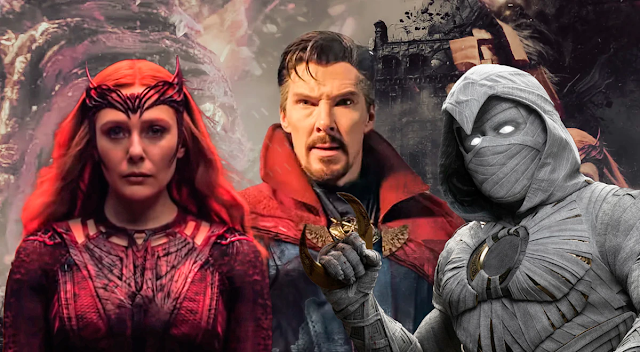
MARVEL CINEMATIC UNIVERSE: MOON KNIGHT (2022) & DOCTOR STRANGE IN THE MULTIVERSE OF MADNESS (2022)

 MCU CHAPTERS 33 & 34


It's a two for one sale! The D+ series Moon Knight finished the same week that Doctor Strange in the Multiverse of Madness opened in theaters nationwide! A double dose of the MCU in the same week! So, if Disney can do it, so can we here at Blood Work!

That, and I'm being lazy with these two.

Moon Knight first. 

I did not like it.

To be candid, it was as though the show was fighting against the core concept. Simply, there was barely any Moon Knight in Moon Knight. About 15 minutes among the 200 minute runtime of the show featured the titular character. And even at the climactic showdown in the final episode, Moon Knight comes across as a lesser ineffectual hero in his own show. It was as though the people making this show actually hated Moon Knight.

But, you know what the show gave us an abundance of? Steven Grant a.k.a. the most annoying frustrating character in any Marvel film, television series, or comic book ever produced. And this Steven Grant isn't even the Steven Grant from the comics, but essentially a whole new character with the name tag of an existing character.

What little Moon Knight we did get, the 45 seconds in episode one, the minute and a half in episode two, and the four minutes in episode three was pretty cool. But the big battle in episode six just fell completely flat, going too far with the kaiju battle, and relegating Moon Knight to the sidekick of Layla's far more capable Scarlet Scarab (who the show and its characters constantly remind us is better than Moon Knight himself). I liked the Asylum Afterlife episode (ep. five) and the little bit of tomb raiding we get in episode four, but it was still indicative of the show's core problem, mainly that it was interested in everything else except Moon Knight.

I've thought Moon Knight was an awesome character for more years than I haven't, enough to bring me out of hibernation to watch. This was the first D+ MCU show I watched since Falcon & Winter Soldier, almost a year prior. I had hope from the trailers. The costume design is cool too (for Moon Knight, not Mr. Knight). Sadly, this painfully reminded me that the D+ shows are nothing I need to see, rather empty calories. This show could've been to D+ what Daredevil was to Netflix. Alas, the direction of this show is so far afield from what it should be.

Overall Ranking: 4 out of 10

Moon Knight is the perfect example of the MCU at large in this current phase, which brings us to...

Doctor Strange 2 

I... really did not like it.

To be clear: I do NOT lay blame at Sam Raimi's feet. I don't believe Sam Raimi is at fault at all. He was hired to do a project and he did it. What that project was was a Marvel Studios/Disney product... not a Sam Raimi film. That said, when Sam Raimi's style and flavor seeps through I genuinely found myself enjoying it. I liked Danny Elfman's score too though Michael Giacchino's score was missed. I liked some of the visuals though they were very inconsistent. And I liked most of the acting, though a few actors here were either plain terrible or wooden and flat.

Beyond that... this is the new bottom of the barrel for me, my least favorite MCU film to date. I understand why Scott Derrickson turned down millions of dollars and walked away. I understand why Sam Raimi refused the title credit "A Sam Raimi Film" during the credit roll, the film credit instead being "A Kevin Feige Production."

And I lay blame entirely on the man whom I once praised as the magic clue inside these gentle walls: Kevin Feige.

The two words that best describe this movie and its effects on the MCU, Marvel Comics, and the creators of these long-lasting and enduring characters are:

"Disrespectful" and "Damaging"

No character or concept was serviced well in this film. At best a lucky few came out no better or worse. But the majority of the elements in this film were far diminished by their inclusion/participation in this film. And, as with Moon Knight, this wasn't really a Doctor Strange story like we were led to believe.

Which plot is the driving force behind this film? Is it Doctor Strange's first film or is it WandaVision?

What does Doctor Strange do in this film that only his character could do, that couldn't be done by another character?

Does Doctor Strange defeat the villain at the end of the film?

If you truthfully answer these questions, not skewing your answers through "another" perspective, should tell you that this is not Doctor Strange's film despite what the title blatantly tells us. And the Doctor Strange in this film is nothing like the Doctor Strange in the previous films (though an argument could be made for his depiction in Spider-Man: No Way Home starting the decline of his character to this point).

Another accurate description of this film is "Subverting Expectations" taken to the nth degree. To me this film felt a lot like the Star Wars: The Last Jedi of the MCU in terms of subverting expectations and script writing, but taken five steps further. This movie jumped the shark in regards to subverting expectations.

The key in making subverting expectations work, at least for me,  is by rewarding the audience afterwards, either with an outcome greater than they expect or by giving them what they expect in the most satisfying way. You subvert some expectations while giving in to other expectations. If a film or story subverts every expectation it rarely works, more often though it leaves the audience feeling jilted or robbed. For me, I obviously felt the latter outcome from this film. 

Bluntly, this film felt like a giant middle-finger to the audience, the source material, the actors and their characters, and, most egregiously, to Stan Lee, Steve Ditko, Roy Thomas, Gene Colan, and everyone who worked on and supported these characters and franchise for nearly 60 years. This movie was as though Marvel took the "Quicksilver / Ralph Boner" joke from WandaVision and stretched it out over the entire film. Disney took our money and kicked us between the legs while doing it.

Overall Ranking: 3 out of 10

I could go on citing everything I disliked about this film for pages, but I'll spare you the pain.

Instead, I'll leave you with a quote from the amazing television show COMMUNITY:

"...all good things, be they people or movie franchises, eventually collapse into sagging, sloppy, rotten piles of hard-to-follow nonsense."

If you made it this far... Thank you and I'm sorry. I would more than welcome a civil deep-dive discussion about these two Marvel projects if you'd like.

For more of my thoughts on all things super hero cinema check out the posts below!

And make sure to leave any comments and thoughts below!


THE MARVEL CINEMATIC UNIVERSE (MCU)

 
Fox-Marvel, Sony-Marvel, and other stuff too!